← Back to Work

Upland Altify — Sales Reference Manager

Sales Reference Manager helps sales teams find and use real customer success stories directly within Salesforce opportunities to build trust, accelerate deals, and avoid “reference burnout” by suggesting the best accounts for specific customer needs.

Upland Altify — Sales Reference Manager
Role
Lead Product Designer
Team
PM & Stakeholders
Engineers
Scope
UX Research
User Testing
Flow Design
Prototyping
Design Systems
Timeline
8 Months (MVP → Redesign)
Problem

The existing, non-productized process created significant friction and risk across the sales organization. Salespeople wasted valuable time searching for appropriate customer references instead of focusing on closing deals. This inefficiency was compounded by a lack of managerial oversight; managers lacked control and visibility, risking the use of outdated or unauthorized references. Critically, the systems for storing, tracking, and approving references were entirely separate from the core sales platform, creating a data fragmentation barrier that necessitated the development of a fully integrated native Salesforce application.

Solution

We successfully designed and launched the Sales Reference Manager as a native product on the Salesforce AppExchange, embedding the solution directly into the team's workflow. This process required 5-to-1 product definition from concept validation through to AppExchange submission. The final system was engineered for contextual matching, automatically suggesting the most suitable customer references based on the real-time deal context — industry, product, and sales stage. Management and request process now occurs seamlessly within the Altify platform, completely eliminating reliance on manual referral tracking.

Result

The product achieved a successful market launch and delivered measurable operational improvements that directly improved sales velocity. By streamlining the reference request process, the new application saved valuable time for sales reps and significantly accelerated deal closure rates. For managers, the system provided a clear, audited view of all reference activity, leading to better compliance and higher-quality usage of customer assets. Ultimately, we successfully developed and launched a brand-new, revenue-generating product on the Salesforce AppExchange.

The Challenge

The primary hurdle was moving from “KYC Chaos” to clarity without overcomplicating the interface. The design team needed to deconstruct a legacy system that hindered efficiency and replace it with a solution that accommodated diverse user roles.

The goal was to create a single system that could serve the distinct, complex requirements of Formulators, Managers, and Analysts equally well.
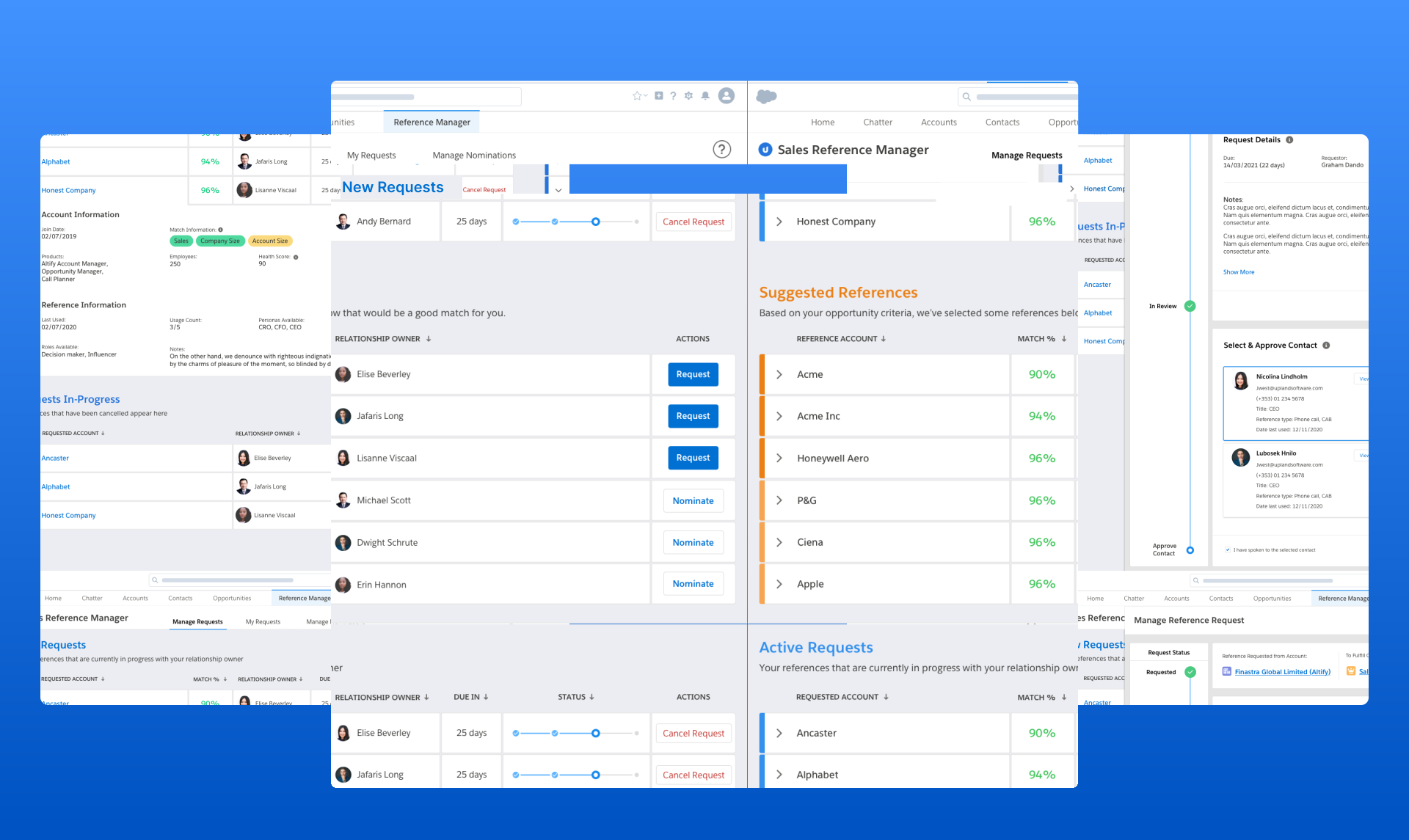
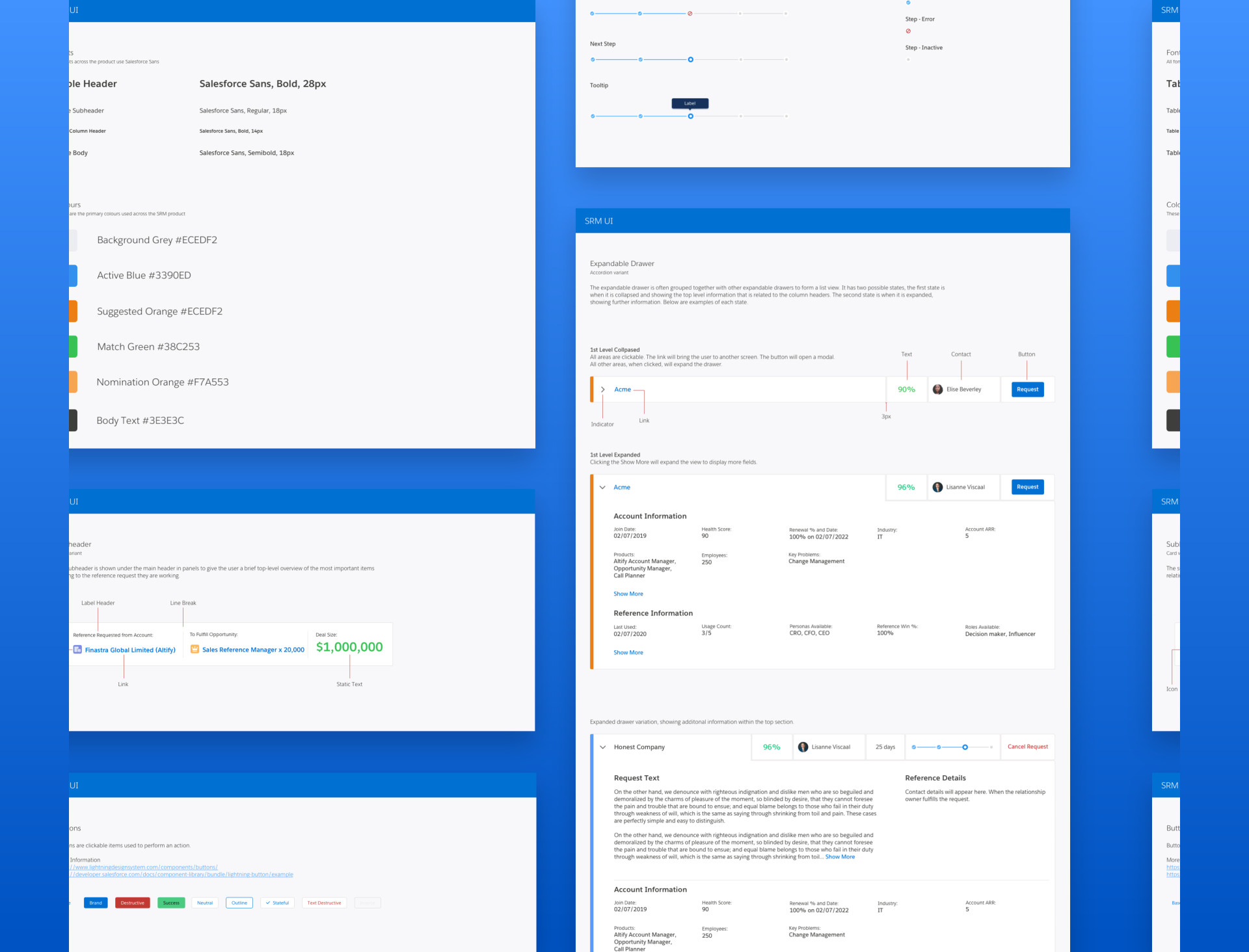
Sales Reference Manager — view 1
Sales Reference Manager — view 2
Process
Discovery
Conducted interviews and usability tests to define the core architecture, needs and full-cycle fulfilment
Mapped existing use-case drop-off points in the manual process to inform automated approaches
Benchmarked competitors and analysed existing market processes
Iterations
MVP releases (aligning AppExchange compliance and role-fit assessments)
Used wireframes and prototypes to validate technical feasibility and user requirements
Conducted regular stakeholder reviews and managed cross-functional momentum with the engineering team
Design
Progressive disclosure was implemented to manage complexity and optimise within the Salesforce documentation
Developed mobile-friendly components to ensure consistent experience across all Salesforce interfaces
Successfully tested the final strategy to optimise the launch strategy to executive leadership
Reflection
This product launch provided deep experience in not just designing, but shipping a complex, integrated enterprise product from the ground up.
The primary learning was mastering the constraints of the Salesforce platform and its design system, ensuring the product felt native while adding unique value.
If done again, I would devote more initial efforts to mastering the complete permissions and governance structure, as this proved to be the most critical dependency for a system operating across without same data silos.
← FenergoBack to Work →